GrapheneOS vs Samsung — Knox is real, but who holds the data?
Samsung Galaxy phones ship with Knox, a genuinely strong hardware-security platform. The honest question is not whether Samsung is insecure — it is not — but that you are trusting two vendors at once, on a closed system, with telemetry on by default. Here is how a GrapheneOS Pixel compares.
Judge the handover.
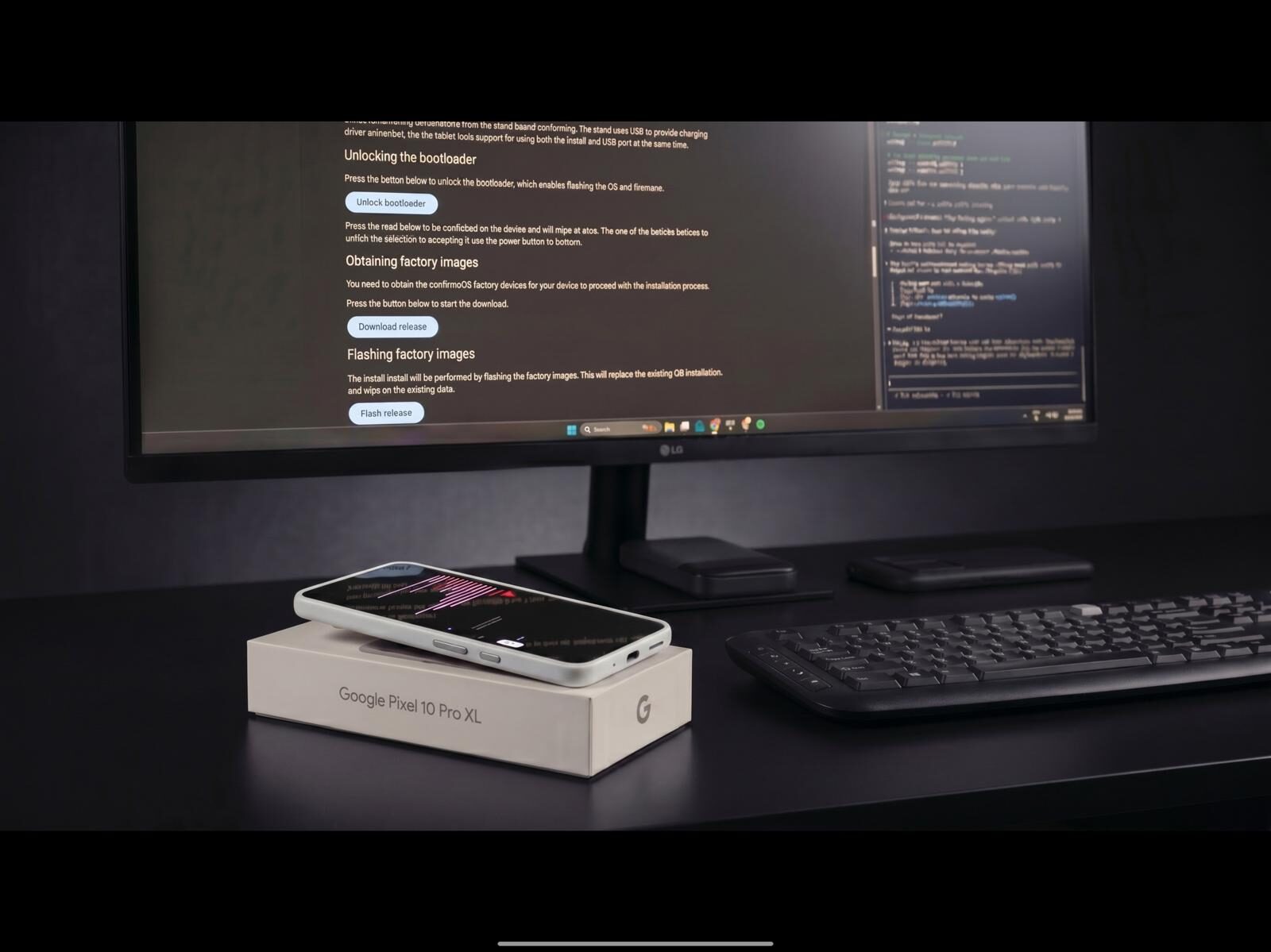
Most sellers can talk about GrapheneOS. The visible difference is the prepared hardware, the provisioning work, the checks and the packaging before it reaches the buyer.
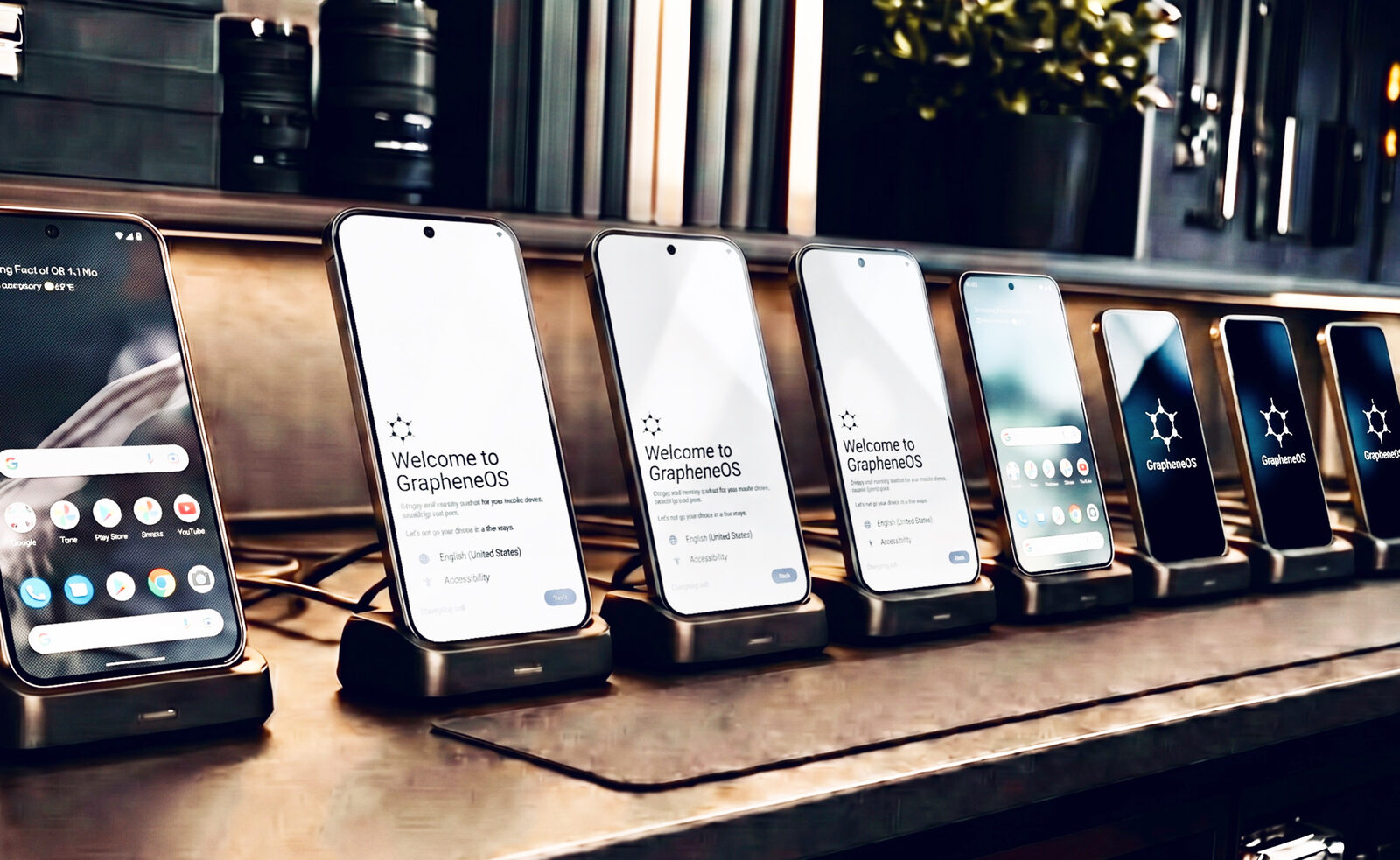
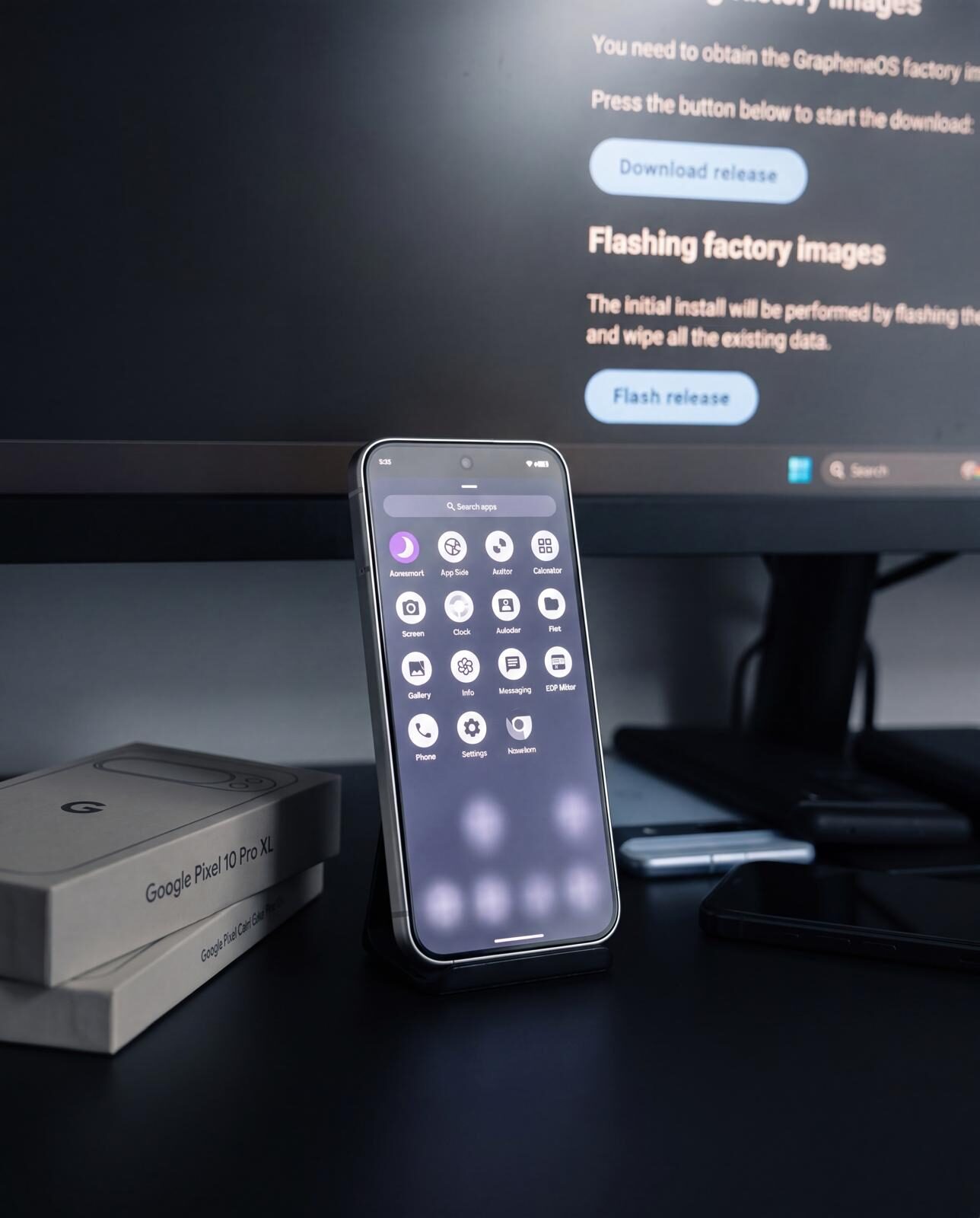
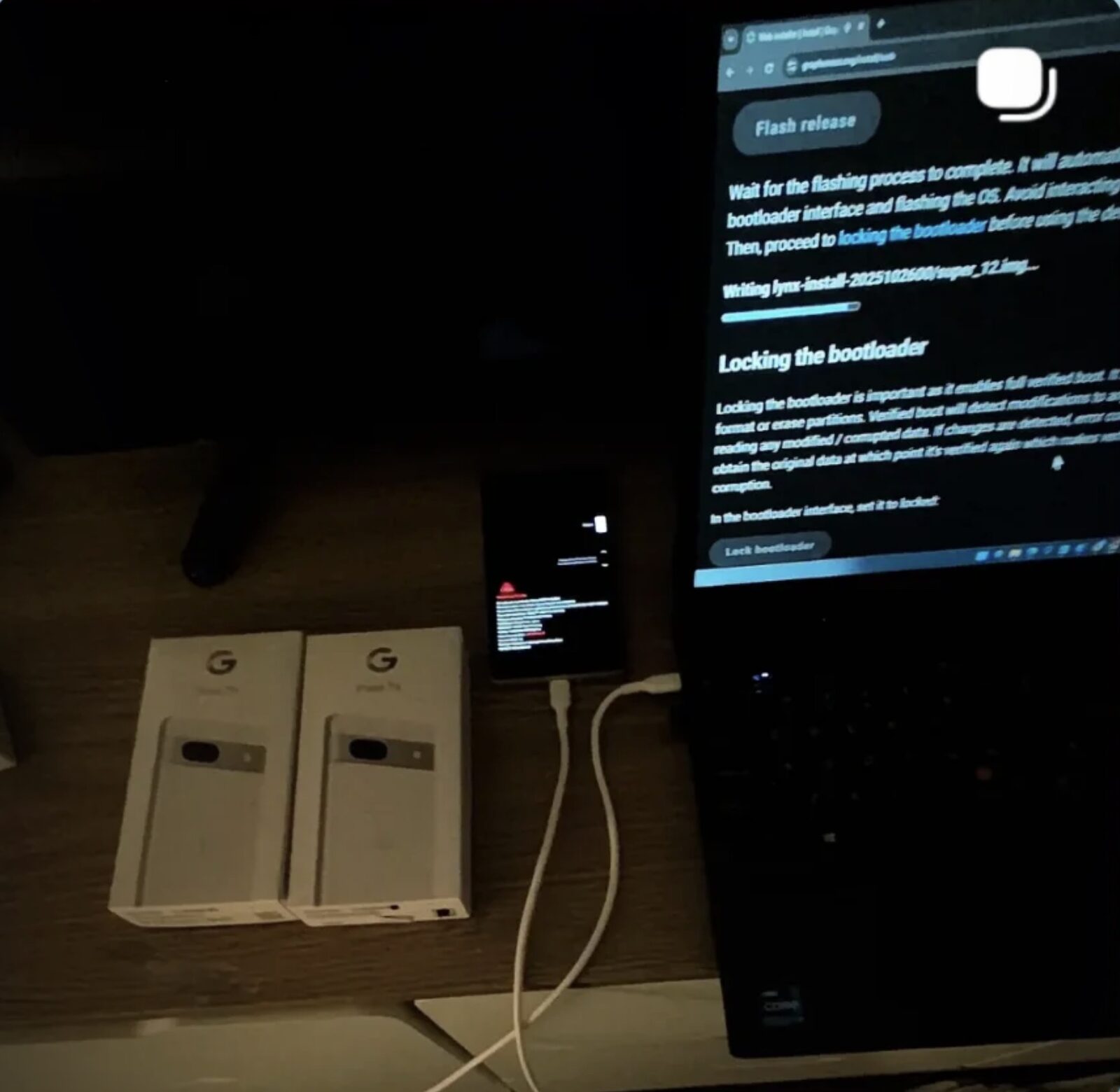
A Samsung Galaxy gives you excellent hardware security (Knox) wrapped in a closed OS that answers to both Samsung and Google, with telemetry and dual accounts by default. A GrapheneOS Pixel gives you an open OS you can verify, no required vendor account, and per-app control — but it has to be a Pixel, because GrapheneOS does not run on Samsung hardware.
Last updated 14 October 2026.
GrapheneOS vs Samsung at a glance
| Property | Samsung Galaxy (One UI) | GrapheneOS Pixel |
|---|---|---|
| Source code you can audit | No (closed) | Yes (open-source) |
| Vendor accounts assumed | Google + Samsung | None required |
| Background telemetry | On by default | Removed |
| Per-app network toggle | No | Yes |
| Per-app sensor toggle | Limited | Yes |
| Hardware security platform | Knox | Titan M2 + verified boot |
| Install trusted OS + relock verified boot | No (trips Knox) | Yes |
| Encrypted separate workspace | Secure Folder | Multiple user profiles |
| Owner-controlled duress layer | No | Phantom Protocol |
| Pre-installed bloat | Yes | None |
This is not a claim that GrapheneOS makes you untraceable — it does not, and no honest vendor would say so. Cellular networks still know which tower your device is on. What changes is how much routine data the device gives away on its own, and how many vendors sit in that path.
What Samsung does well
Samsung Knox is not marketing fluff. It is a layered hardware-and-software security platform with a hardware root of trust, real-time kernel protection, and a tamper fuse (Knox Warranty Bit) that trips if the bootloader is unlocked. Secure Folder gives you an encrypted, separated workspace, updates are long and regular on current flagships, and for managed enterprise fleets Knox is a strong, mature option.
None of that is in dispute on this page. The question is what happens when your requirement is verifiability and control, not just defence against outsiders.
Where a Samsung stops matching a privacy need
- Two vendors, not zero. One UI runs Google services and Samsung's own account, services, and analytics. That is more telemetry surface and more parties in a position to collect, not fewer.
- You cannot verify it. One UI and Knox are closed-source. You are trusting both Samsung's and Google's descriptions of what the device does — you cannot independently audit it.
- You cannot install a trusted OS and relock. Unlocking the bootloader trips the Knox fuse and permanently disables Knox features, and many Samsung models block unlocking altogether. Either way, GrapheneOS does not support Samsung hardware, so you cannot replace the OS with one you trust and re-establish verified boot.
- Telemetry and bloat by default. A stock Galaxy arrives with pre-installed apps and analytics enabled; the controls are coarser than per-app network and sensor toggles on GrapheneOS.
When each one is the right call
Stay on Samsung if…
You want a Galaxy's hardware, S Pen, or cameras, your threat model is everyday, and managed Knox security or Secure Folder covers your needs. It is a strong, well-supported phone for mainstream use.
Move to a GrapheneOS Pixel if…
You want an OS you can verify, no Google or Samsung account required, per-app network and sensor control, and an owner-controlled duress layer — or your work raises the stakes — see business and executive contexts.
Because GrapheneOS is Pixel-only, switching from Samsung means moving to a Pixel — our team handles the device prep and data migration so it is ready out of the box. See the GrapheneOS phone price comparison or GrapheneOS Phone Australia.
Can GrapheneOS run on Samsung in 2026?
No. GrapheneOS does not support Samsung Galaxy phones, Samsung tablets, or Samsung Fold devices. The supported-device list is Pixel-only because GrapheneOS depends on hardware-backed verified boot, a supported secure element, timely firmware updates, and the ability to relock the bootloader after installing the operating system.
If you searched for “GrapheneOS Samsung” or “GrapheneOS on Samsung”, the safe answer is not to flash an unofficial build. Use a supported Pixel, keep verified boot intact, and treat Samsung Knox as the right comparison point for people staying on Galaxy hardware.
Supported Pixel choices change as Google releases new hardware and GrapheneOS adds official support. For the current prepared range, start with the GrapheneOS phone Australia buyer page; for model-specific notes, see GrapheneOS on Pixel 10.
GrapheneOS vs Samsung — FAQ
Can I install GrapheneOS on my Samsung Galaxy?
No. GrapheneOS only supports Google Pixel hardware, because Pixels let you install an alternative OS and then re-lock verified boot against it with full integrity. Samsung devices do not support that — unlocking the bootloader trips the Knox fuse and many models block unlocking entirely. A GrapheneOS phone is therefore always a Pixel.
Isn't Samsung Knox very secure?
Yes, Knox is a genuinely strong hardware-security platform, especially for managed enterprise fleets. The limitation is not Knox's strength — it is that One UI is closed-source and runs both Google and Samsung services with telemetry on by default. Knox protects the device well against outsiders; it does not give you verifiability or remove the vendors from the data path.
Does GrapheneOS or Samsung collect less data?
A GrapheneOS Pixel collects far less by default: Google services are removed (and optional, sandboxed if you add them), there is no required account, and there is no background analytics. A stock Galaxy runs both Google and Samsung accounts and analytics by default, which is more collection surface, not less.
Will my apps and banking still work on a GrapheneOS Pixel?
Mostly, yes. GrapheneOS can run Google Play services in a sandbox, so the large majority of banking, payment, and everyday apps work. A small number of apps that demand uncompromised-device checks are the exception, and we are upfront about which.
Does a privacy phone make me anonymous or untraceable?
No. No phone does, and we would never claim otherwise. A hardened phone reduces the routine data your device gives away and removes vendor cloud dependence, but cellular networks still see which tower you connect to. It raises the cost and effort of monitoring you — it does not make you invisible.
Verify, don't just trust.
An open OS you can audit, with no vendor account required — prepared in Australia on Pixel hardware and ready to use out of the box.
Browse Devices → Talk to Us