GrapheneOS vs iPhone — what actually differs.
Both are well-engineered. The real difference is not "which is more secure" in the abstract — it is openness, who holds your keys, and how much control you have over each app. This page compares the operating systems and where each one fits.
Judge the handover.
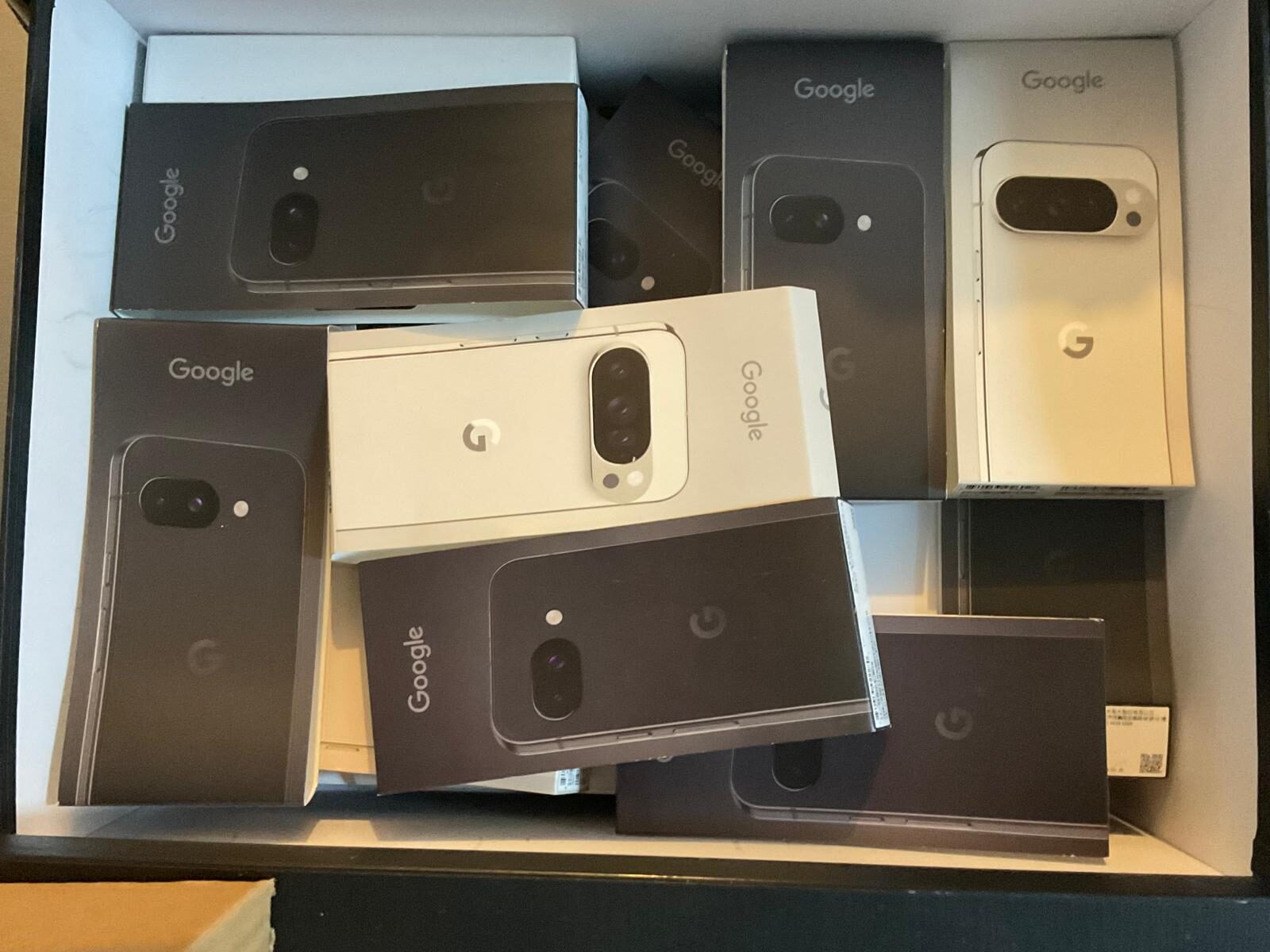
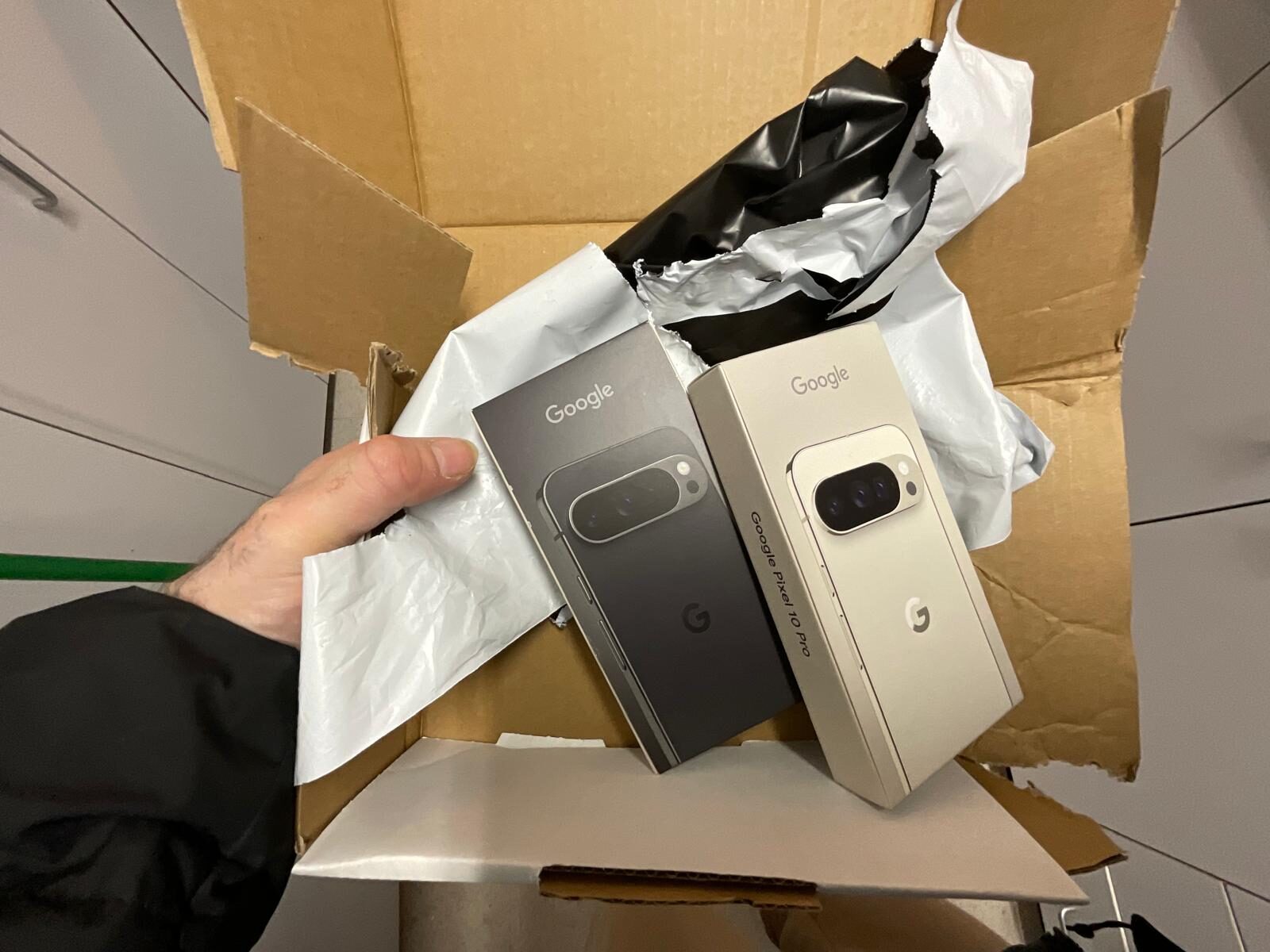
Most sellers can talk about GrapheneOS. The visible difference is the prepared hardware, the provisioning work, the checks and the packaging before it reaches the buyer.
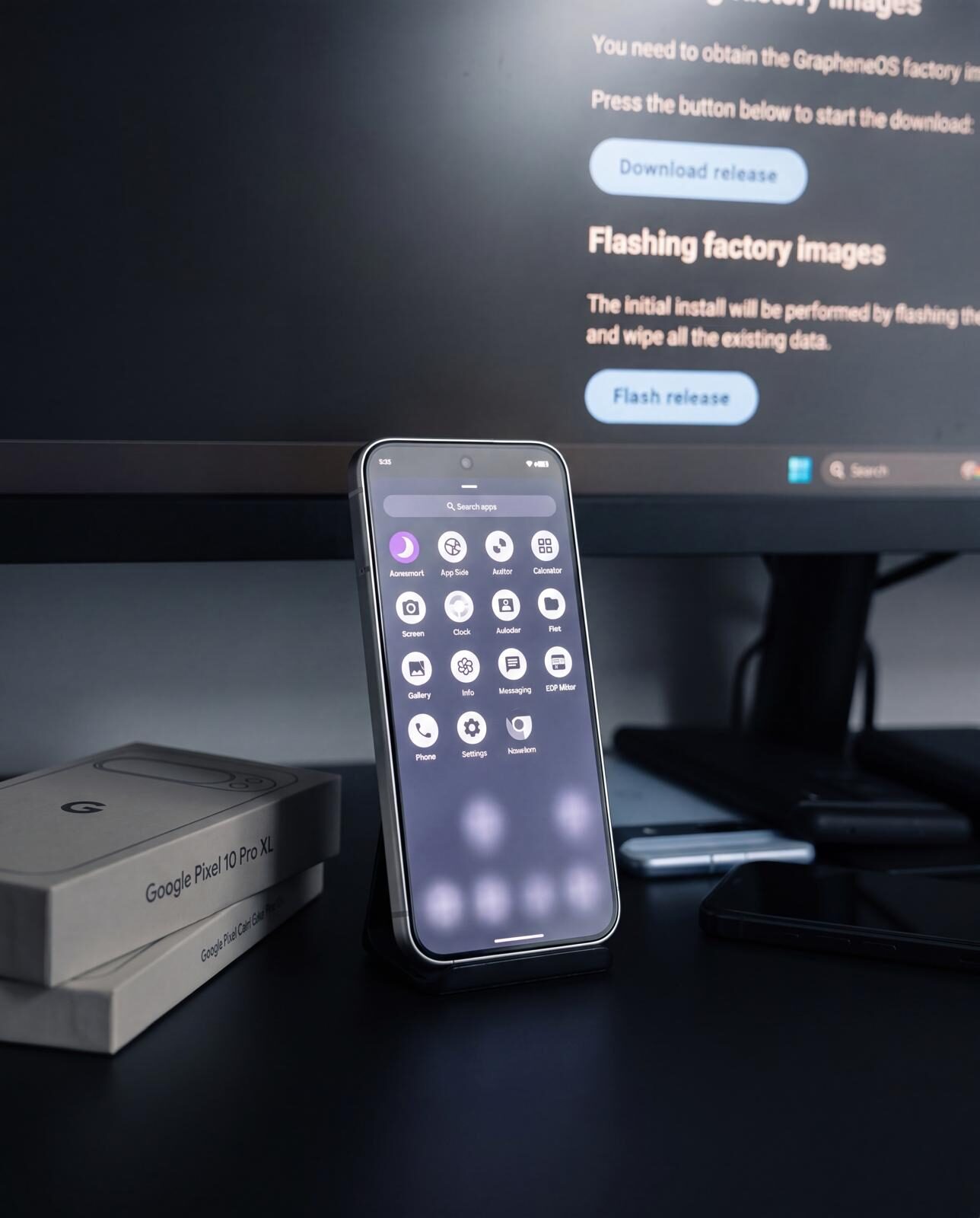
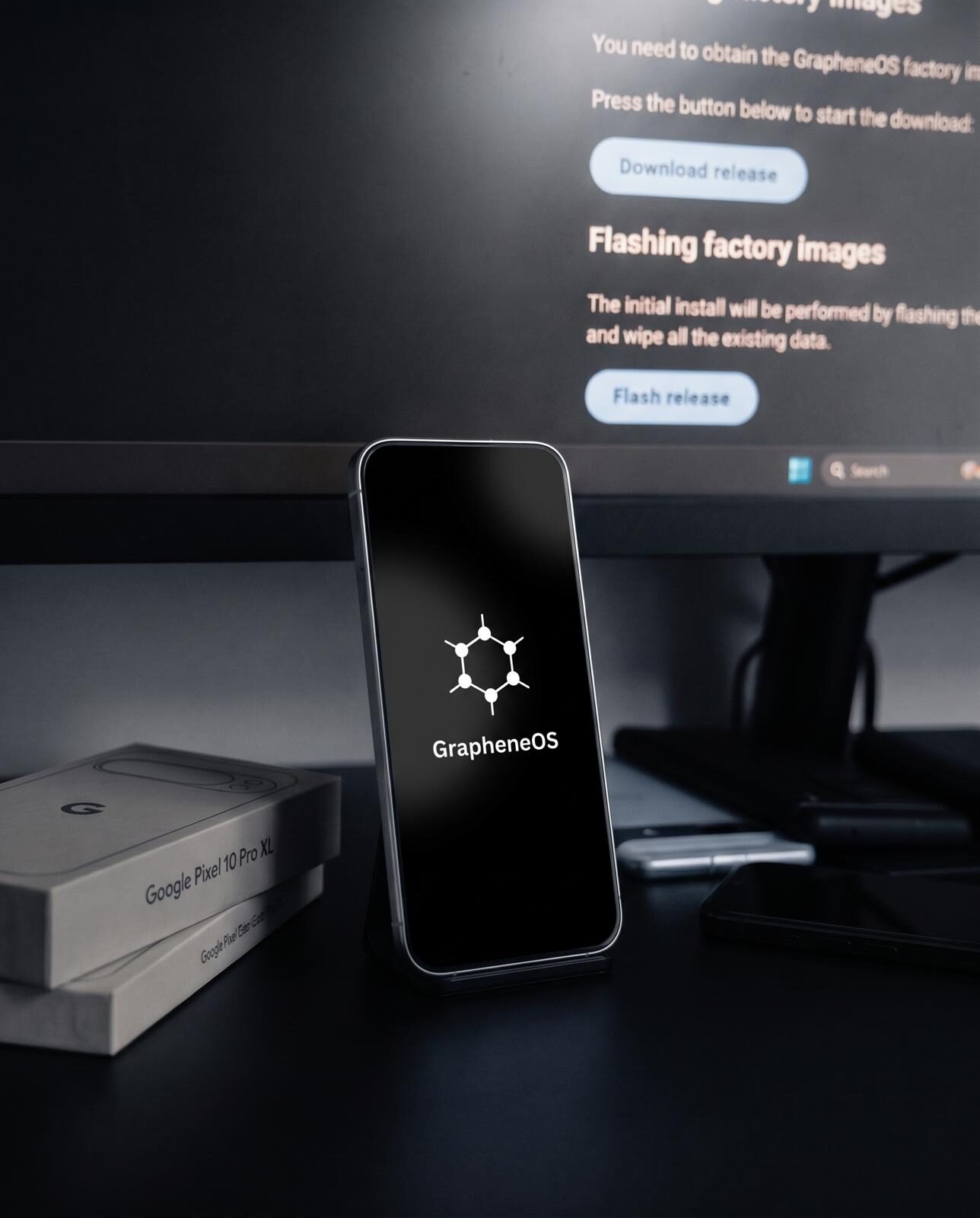
iOS is a tightly integrated, closed system you trust Apple to run honestly; GrapheneOS is an open system you can verify, with Google services removed and per-app control added. iPhone wins on ecosystem and default convenience. GrapheneOS wins on verifiability, control, and keeping any vendor out of the loop.
Last updated 14 September 2026.
GrapheneOS vs iPhone at a glance
| Property | Stock iPhone (iOS) | GrapheneOS Pixel |
|---|---|---|
| Source code you can audit | No (closed) | Yes (open-source) |
| Vendor account required | Effectively yes | No |
| Default cloud key holder | Apple (unless ADP on) | You |
| Per-app network toggle | No | Yes |
| Per-app sensor toggle | Limited | Yes |
| Sandboxed Google services (optional) | N/A | Yes |
| Replace OS + relock verified boot | No | Yes |
| End-to-end messaging | iMessage | Signal / Threema |
| Owner-controlled duress layer | No | Phantom Protocol |
| Update model | Long, vendor-set | Monthly, security-focused |
This is not a claim that GrapheneOS makes you untraceable — it does not, and no honest vendor would say so. Cellular networks still know which tower your device is on. What changes is how much routine, ambient data the device gives away on its own, and who holds the keys to the rest.
What the iPhone does well
Credit where it is due. The Secure Enclave is strong hardware, iMessage and FaceTime are end-to-end encrypted by default, and Apple ships timely security updates for years. Advanced Data Protection now lets you end-to-end encrypt most iCloud categories if you turn it on. For someone whose main concern is casual snooping and low-grade malware, a well-configured iPhone is a perfectly reasonable position.
None of that is in dispute here. The question is what happens when "trust the vendor" is no longer good enough for you.
Where iOS stops matching a privacy need
- You cannot verify it. iOS is closed-source. You are trusting Apple's description of what the device sends and stores — you cannot independently check it the way you can with an open-source OS.
- The account and cloud are assumed. Using the device fully expects an Apple ID. Advanced Data Protection helps, but it is off by default and not everyone enables it.
- Coarser per-app control. iOS permissions are good, but GrapheneOS adds a per-app network toggle and per-app sensor toggle that iOS does not offer.
- You take the OS as shipped. You cannot replace iOS with an operating system you trust more and re-establish full verified boot against it.
When each one is the right call
Stay on iPhone if…
You are deep in Apple's ecosystem, your threat model is everyday, and iMessage, AirDrop, and Apple Watch matter more to you than verifiability. Turn on Advanced Data Protection, tighten a few settings, and you are in a sound place.
Move to a GrapheneOS Pixel if…
You want a device you can verify, you would rather no vendor held your keys, you need per-app network and sensor control or an owner-controlled duress layer, or your work raises the stakes — see executive and journalist contexts.
If you do switch, the path is well-trodden — our iPhone to GrapheneOS migration guide covers contacts, photos, authenticator apps, and iMessage deregistration.
GrapheneOS vs iPhone — FAQ
Is GrapheneOS more secure than an iPhone?
For a verifiable, control-focused posture, yes — it is open-source, removes Google services by default, adds per-app network and sensor toggles, and lets you relock verified boot against an OS you trust. The iPhone has excellent hardware security; the real difference is openness, control, and who holds your keys, not a blanket claim that one is simply "better" for everyone.
Does GrapheneOS run on an iPhone?
No. GrapheneOS only runs on Google Pixel hardware, because Pixels allow you to install an alternative OS and then re-lock verified boot against it. iPhones do not permit that, so a GrapheneOS phone is always a Pixel.
Will I lose iMessage and FaceTime?
Yes — those are Apple-only. The equivalent on GrapheneOS is Signal or Threema for end-to-end encrypted messaging and calls. Most people find the switch straightforward once contacts are set up; we help with iMessage deregistration so your messages route correctly.
Can I still use banking and everyday apps?
Mostly, yes. GrapheneOS can run Google Play services in a sandbox, so the large majority of banking, payment, and mainstream apps work. A small number of apps that demand uncompromised-device checks can be the exception; we are upfront about which.
Does a privacy phone make me anonymous?
No. No phone does, and we would never claim otherwise. A hardened phone reduces the routine data your device gives away and removes vendor cloud dependence, but cellular networks still see which tower you connect to. It raises the cost and effort of monitoring you — it does not make you invisible.
Verify, don't just trust.
An open OS you can audit, with no vendor holding your keys — compare the prepared Pixel range before choosing a device.
Compare configured GrapheneOS phones → Talk to Us