Pixel 10 Pro vs Pixel 9 Pro
Both are Pixel Pro flagships. Both run the same full GrapheneOS hardening. Both are armed with Phantom Protocol before they reach you. The honest answer to "which should I buy" comes down to two things a privacy buyer actually feels: how long the device will keep receiving guaranteed security updates, and whether the newer silicon is worth the difference.
Judge the handover.
Most sellers can talk about GrapheneOS. The visible difference is the prepared hardware, the provisioning work, the checks and the packaging before it reaches the buyer.
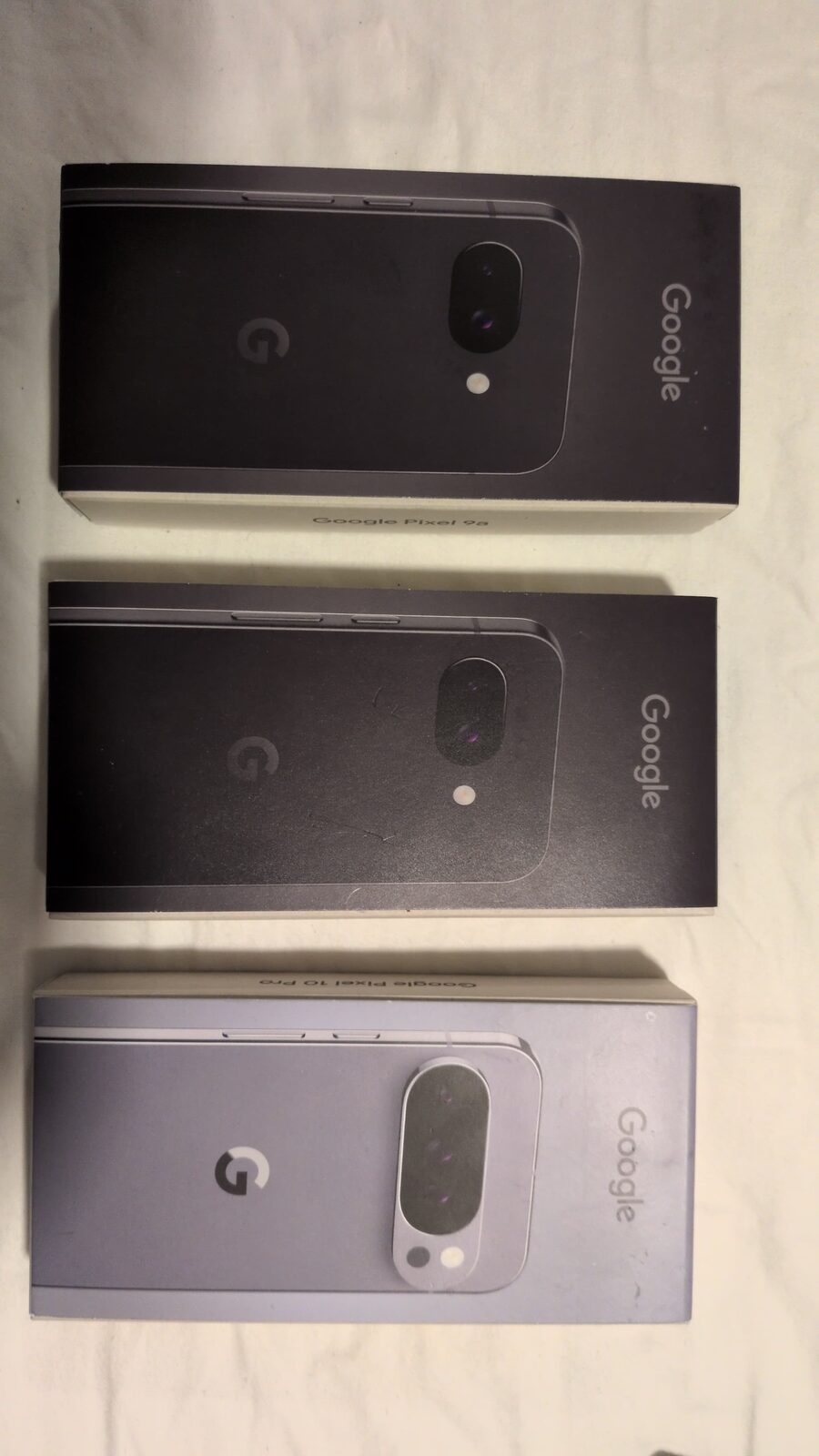
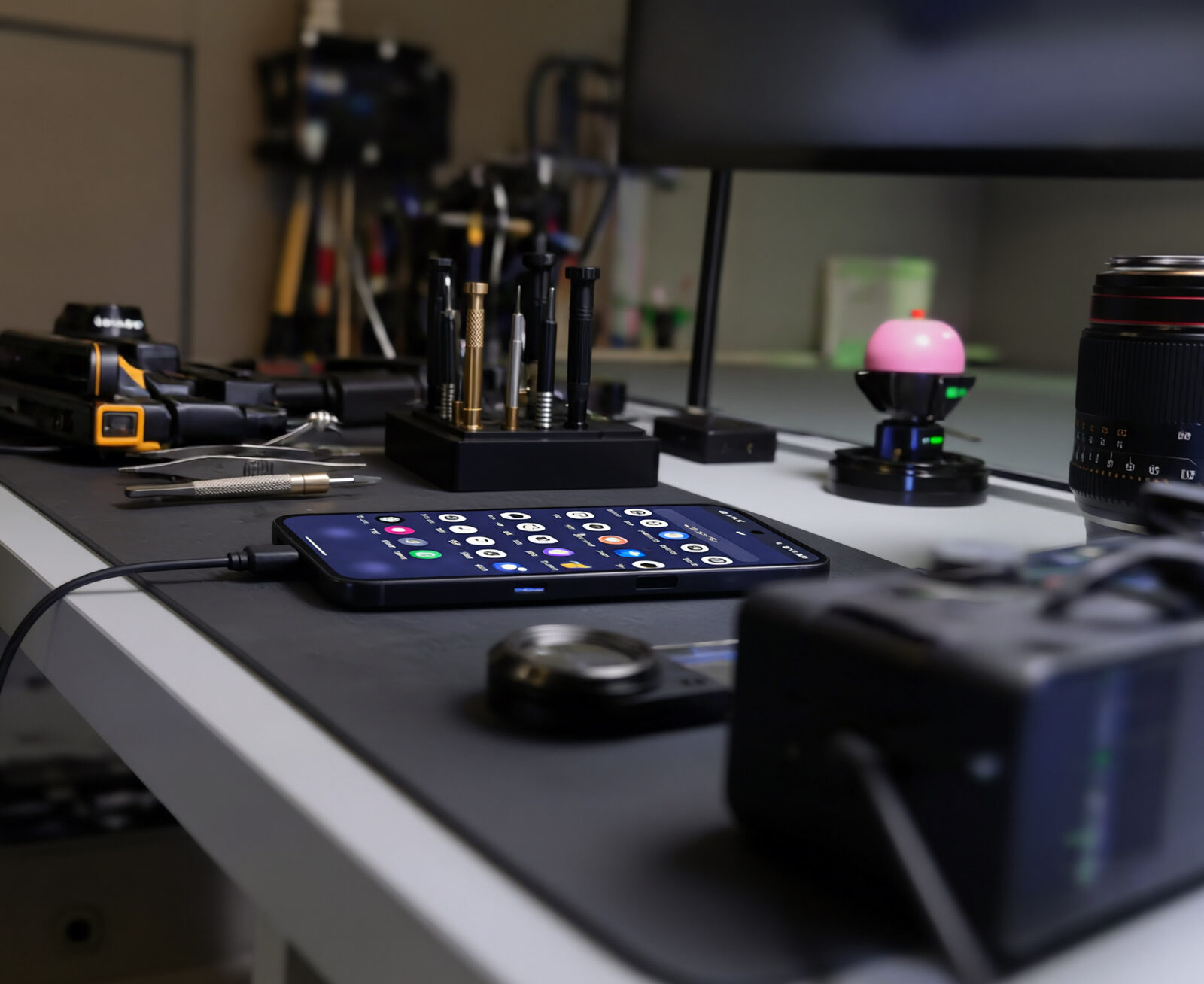
The privacy protection is identical on both — GrapheneOS hardening does not change between them. Buy the Pixel 10 Pro for the newest Tensor G5, the Titan M3 security chip and the longest update runway. Buy the Pixel 9 Pro to keep the same protection and near-identical hardware for less.
The one thing that is exactly the same
This is the point most spec comparisons miss for a privacy buyer: your protection does not come from the chipset. It comes from the operating system. Every device we prepare — Pixel 10 Pro and Pixel 9 Pro alike — receives the same GrapheneOS treatment: verified boot, a relocked bootloader, hardened memory allocator, no Google services with system privileges, sandboxed Play, per-app network and sensor controls, and Phantom Protocol's duress layer. On the privacy dimension, the two phones are equal. What follows is everything else.

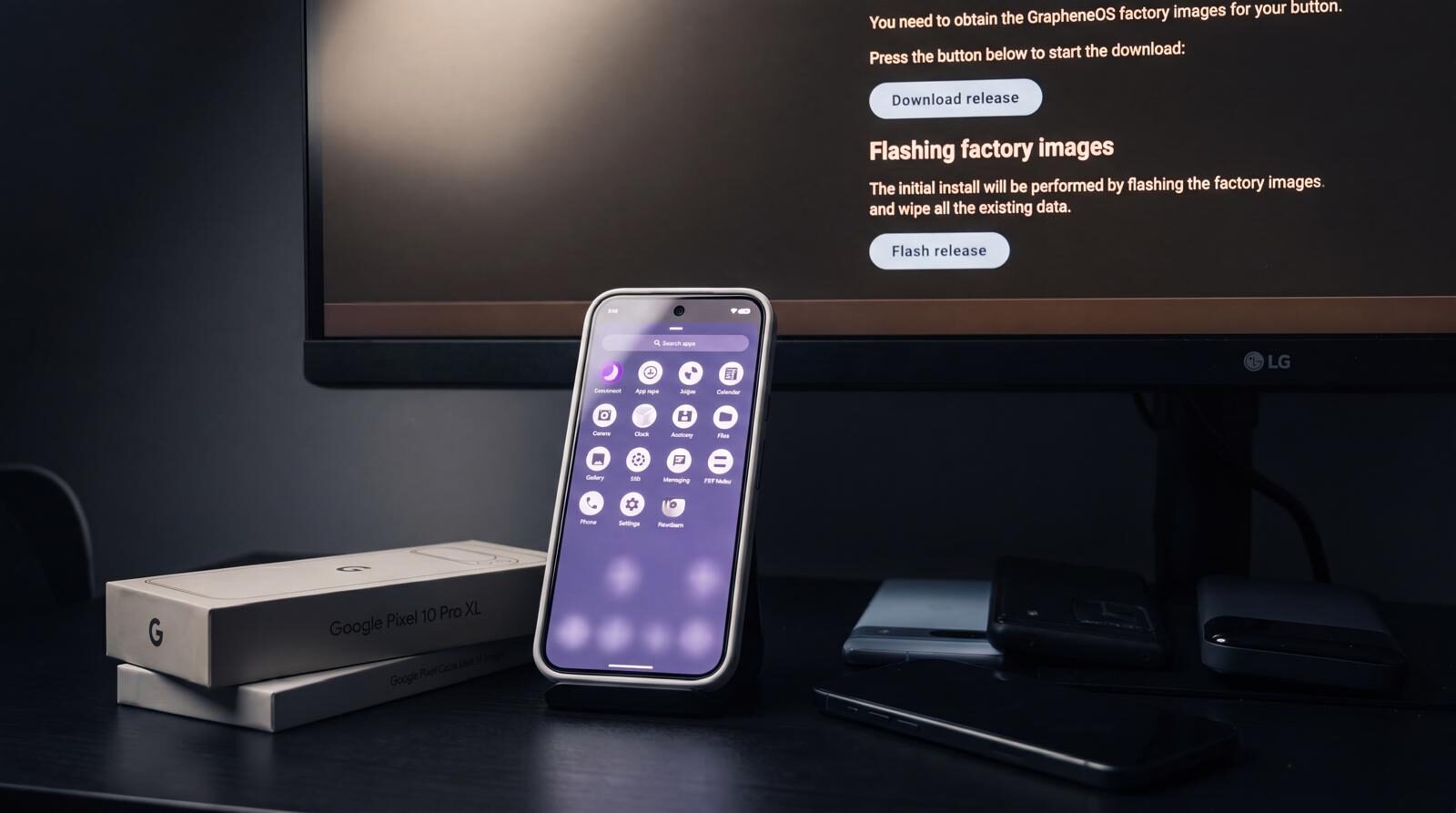
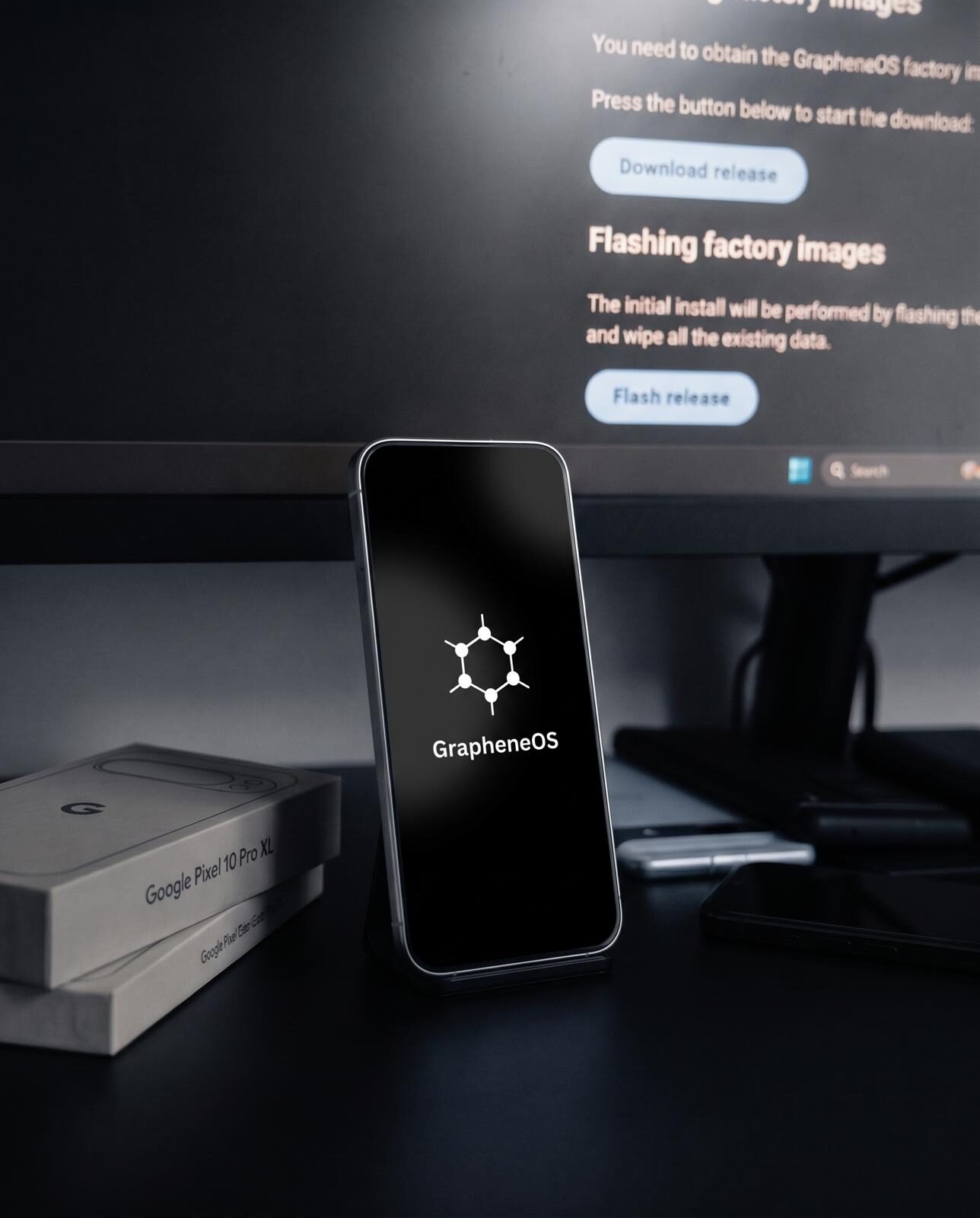
Side by side
| Pixel 10 Pro | Pixel 9 Pro | |
|---|---|---|
| Processor | Tensor G5 · Titan M3 security chip | Tensor G4 · Titan M2 security chip |
| Display | 6.3" LTPO OLED · 120Hz · 2856×1280 | 6.3" LTPO OLED · 120Hz · 2856×1280 |
| RAM | 12 GB | 12 GB |
| Storage | 128 / 256 / 512 GB | 128 / 256 GB |
| Rear camera | 50 MP + 48 MP UW + 48 MP tele | 50 MP + 48 MP UW + 48 MP tele |
| Battery | 5000 mAh | 4700 mAh |
| Water / dust | IP68 | IP68 |
| GrapheneOS hardening | Full · identical | Full · identical |
| Phantom Protocol | Armed | Armed |
| Guaranteed update runway | Longest (newest hardware) | Long (one generation earlier) |
Read the table honestly and the pattern is clear: the display, RAM and camera system are the same. The real differences are the newer Tensor G5 and Titan M3, a slightly larger 5000 mAh battery, an extra 512 GB storage option, and the update horizon that comes with newer silicon.
Why the update runway matters most
For a privacy device, the single most valuable long-term property is not benchmark speed — it is how many more years the hardware will keep receiving vendor firmware and GrapheneOS security updates. A phone that stops receiving updates stops being trustworthy. Because the Pixel 10 Pro is a generation newer, it sits earlier in that support window, which means more years of guaranteed patches before the question of replacement ever arises.
The Pixel 9 Pro is not "unsupported" — far from it. It runs current GrapheneOS with full hardening today and will for years. But if you intend to keep one device for as long as possible without another purchase decision, the newer platform buys you the longest runway.
Who should buy the Pixel 10 Pro
You keep phones for years
The longest guaranteed update runway means the fewest future decisions. If "buy once, keep it hardened" is the goal, the newer platform wins.
You want the newest silicon
Tensor G5 and the Titan M3 security chip are the current generation. If you value having the latest hardware root of trust, this is it.
You need the storage or endurance
The 512 GB option and the larger 5000 mAh battery are exclusive to the 10 Pro in this pairing.
You travel heavily
More battery headroom on court, chambers, airport and hotel networks — paired with Mullvad VPN and a global eSIM.
Who should buy the Pixel 9 Pro
You want the same protection for less
Identical GrapheneOS hardening and Phantom Protocol, near-identical hardware, at a lower price. Nothing about your privacy is compromised.
Battery and storage are already enough
4700 mAh and up to 256 GB comfortably cover most users. If those numbers meet your needs, the extra spend on the 10 Pro buys you little.
You value proven hardware
A mature, well-understood platform with an excellent camera and a long support tail still ahead of it.
You are equipping a fleet
The value flagship is often the smarter per-seat choice for a firm — see business & bulk orders.
Not sure a Pixel Pro is your device at all?
If budget is the priority, the Pixel 9A Secure Edition carries the identical GrapheneOS hardening at the most accessible price. If you want maximum screen and battery, the Pixel 10 Pro XL is the larger-format flagship. Undecided across the whole range? Our Device Finder narrows it in a minute, and the best privacy phone in Australia guide sets out the full lineup. To understand what the hardening actually does, start with what GrapheneOS is and how a prepared device compares to flashing it yourself.
Choose your GrapheneOS Pixel
Every device is hand-configured on GrapheneOS, ships with Threema, Mullvad VPN and a global eSIM, and is backed by a 12-month warranty.
Pixel 10 Pro
From $2,289 · 6.3″ · 128GB
View →Pixel 10 Pro XL
From $2,289 · 6.8″ · 256GB
View →Pixel 10
From $1,850 · 6.3″ · 128GB
View →Pixel 10a
From $1,550 · 6.3″ · 128GB
View →Pixel 10 Fold Pro
From $3,199 · 8.3″ · 256GB
View →Pixel 9 Pro
From $1,650 · 6.3″ · 128GB
View →Pixel 9 Pro XL
From $1,750 · 6.8″ · 128GB
View →Pixel 9a
From $1,399 · 6.1″ · 128GB
View →Pixel 9 Fold
From $1,999 · 8.0″ · 256GB
View →Pixel 10 Pro vs Pixel 9 Pro — FAQ
Is the Pixel 10 Pro more private than the Pixel 9 Pro?
No. Privacy protection on both comes from GrapheneOS, and the hardening is identical: verified boot, relocked bootloader, hardened memory allocator, sandboxed Google Play, per-app network and sensor permissions, and Phantom Protocol. The differences between the two phones are hardware — chipset, battery and storage — not privacy.
Does the Pixel 9 Pro still get GrapheneOS updates in 2026?
Yes. The Pixel 9 Pro runs current GrapheneOS with full hardening support today and will continue receiving updates for years. It is a fully supported, current-generation privacy device — one hardware generation behind the 10 Pro, not end-of-life.
What actually changes between Tensor G5 and Tensor G4?
The Pixel 10 Pro uses the newer Tensor G5 with the Titan M3 security chip; the Pixel 9 Pro uses Tensor G4 with Titan M2. Both provide a hardware root of trust that GrapheneOS builds on. The newer platform brings performance and efficiency gains and sits earlier in its guaranteed update window.
Which one should I buy?
Buy the Pixel 10 Pro for the longest update runway, newest silicon, 512 GB option and larger battery. Buy the Pixel 9 Pro for the same protection and near-identical hardware at a lower price. There is no wrong answer on privacy — both are equally hardened.
Do both phones come with Phantom Protocol and a VPN?
Yes. Every device we prepare is armed with Phantom Protocol, provisioned with Mullvad VPN, Threema and a global eSIM, and verified before dispatch — regardless of which model you choose.
Can I use my banking apps on either one?
In almost all cases, yes — apps install via sandboxed Google Play on both. See our GrapheneOS banking apps in Australia page for how app compatibility works, and tell us your priority apps and we verify them before dispatch.
See all GrapheneOS Pixel options
Every model ships hand-configured with Threema, Mullvad VPN and a global eSIM — same hardening, different hardware.
Pixel 10 Pro
From $2,289 · 6.3″ · 128GB
View →Pixel 10 Pro XL
From $2,289 · 6.8″ · 256GB
View →Pixel 10
From $1,850 · 6.3″ · 128GB
View →Pixel 10a
From $1,550 · 6.3″ · 128GB
View →Pixel 10 Fold Pro
From $3,199 · 8.3″ · 256GB
View →Pixel 9 Pro
From $1,650 · 6.3″ · 128GB
View →Pixel 9 Pro XL
From $1,750 · 6.8″ · 128GB
View →Pixel 9a
From $1,399 · 6.1″ · 128GB
View →Pixel 9 Fold
From $1,999 · 8.0″ · 256GB
View →Same protection. Your choice of hardware.
Whichever you pick, it ships hardened, armed and verified — with a 12-month warranty and crypto accepted.
Pixel 10 Pro → Pixel 9 Pro →