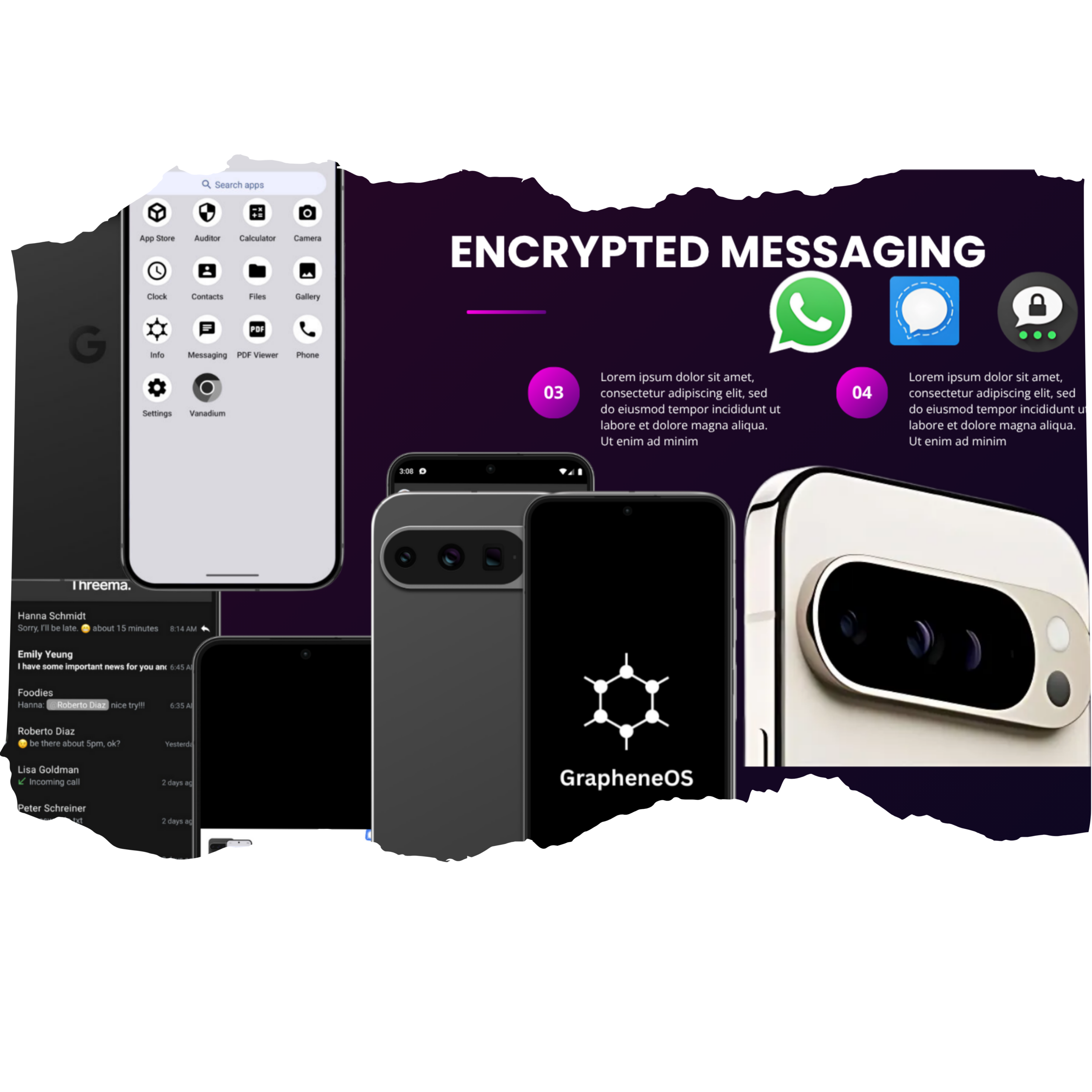
Custom hardened mobile setups like GrapheneOS enhance journalist and privacy pro resilience by using duress PINs, metadata minimisation, compartmentalisation, and secure communications to protect data under coercion or seizure.
Duress PIN solutions provide executives and investigators with covert device access control, panic actions, decoy profiles, metadata minimisation, and role-based presets to protect data and ensure post-event integrity.
Fail-closed device failure modes and features like duress PINs, panic actions, hardened OS (GrapheneOS), metadata minimization, and secure communications protect sensitive data in high-risk situations.
Duress PINs enable emergency actions like silent locks or data wipes to protect sensitive data under coercion. Combined with hardened OS, encryption, and threat modeling, they secure devices in...
Custom mobile security for executives and investigators uses hardened AOSP/GrapheneOS, duress PINs, metadata minimisation, and tailored threat models to protect data under loss, seizure, or coercion.
Duress PINs and panic actions are vital for mobile security, protecting data under coercion via secret codes and selective or full data wipes. GrapheneOS and tailored threat models enhance...
This guide details mobile strategies for privacy-critical professionals, emphasizing metadata risks and mitigation via hardened systems like GrapheneOS, duress PINs, panic actions, and privacy-focused devices.
Custom security configurations for privacy-critical professionals create hardened phones that protect data under duress via features like duress PINs, metadata minimisation, verified boot, and remote wipe, ensuring secure use...