Standard smartphones fail privacy-critical users due to biometric coercion, cloud risks, and metadata leaks. Using GrapheneOS, long passphrases, duress PINs, metadata minimisation, VPNs, and physical security enhances data protection.
Panic actions provide immediate lockdown tools for privacy-critical mobile devices, enabling quick data protection via duress PINs, panic wipes, and network kill switches, essential for high-risk digital security.
Standard smartphones lack protection against device seizure, coercion, and metadata risks in hostile environments. Privacy Devices’ Hardened Mobile Systems offer tailored, hardware-backed security and privacy by design.
Duress PINs add critical defense against coercion by triggering panic actions like key destruction or decoy profiles, while Privacy Devices' hardened systems offer advanced mobile security for high-risk users.
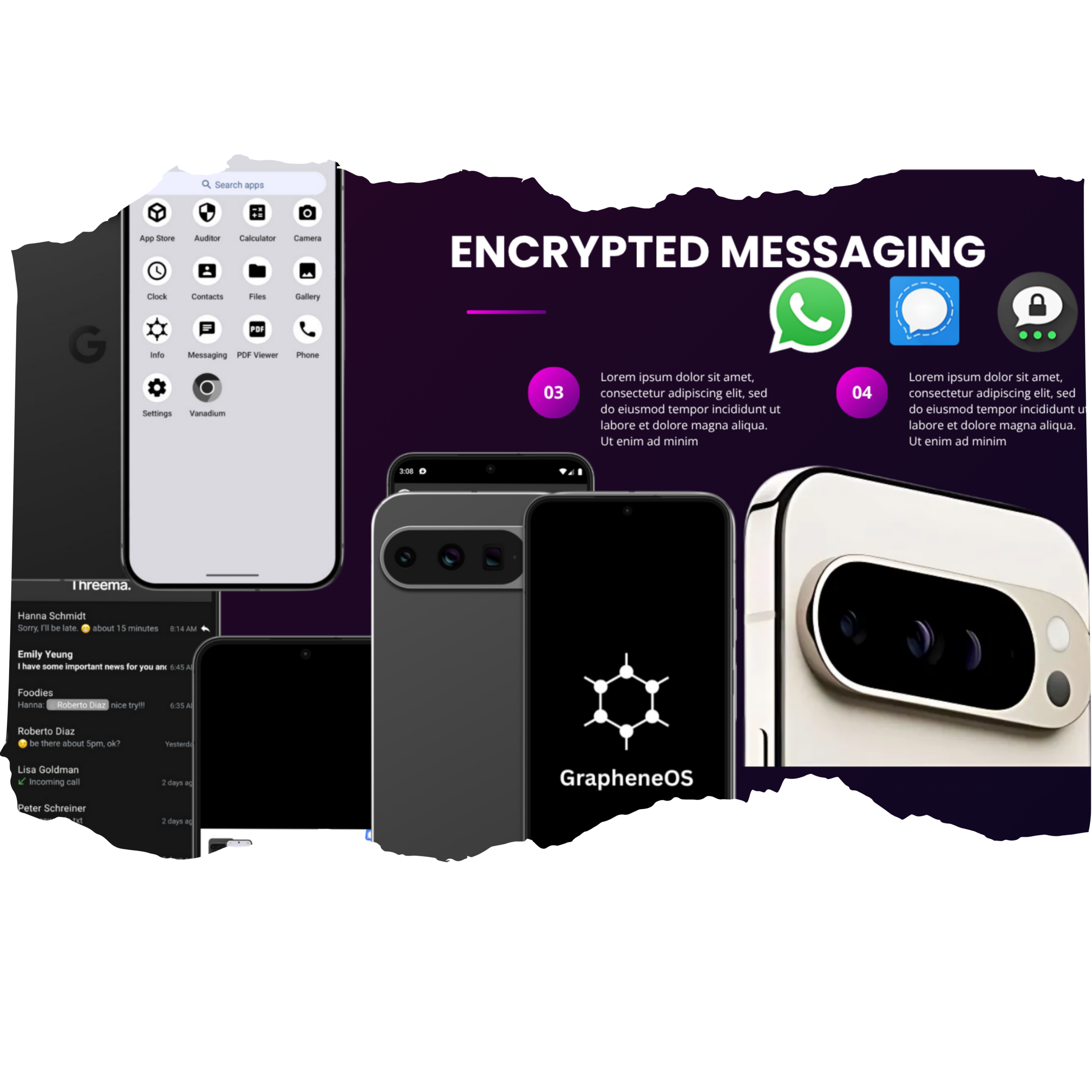
This guide details practical metadata minimisation and hardened mobile systems like AOSP Hardened and GrapheneOS to protect digital footprints, emphasizing privacy apps, compartmentalisation, and duress controls for real-world security.
Standard smartphones lack robust security against real-world threats like coercion and surveillance. Hardened systems with features like duress PINs, panic wipes, and AOSP hardening offer superior data protection and...
Panic actions on Privacy Phones provide critical last-line defense in high-risk situations by enabling duress PINs, device lockdown, and cryptographic key destruction to protect sensitive data from loss or...
This guide details fail-safe mobile security measures—duress PINs, panic actions, metadata minimisation, compartmentalised profiles, USB restrictions, Mullvad VPN, encryption, fake profiles, and Faraday bags—to protect data from loss, seizure,...
Critical features for hardened mobile systems include verified boot, hardware-backed keystore, strong encryption, coercion resistance, compartmentalisation, metadata minimisation, sensor governance, secure recovery, quick actions, offline protection, and tailored configurations...