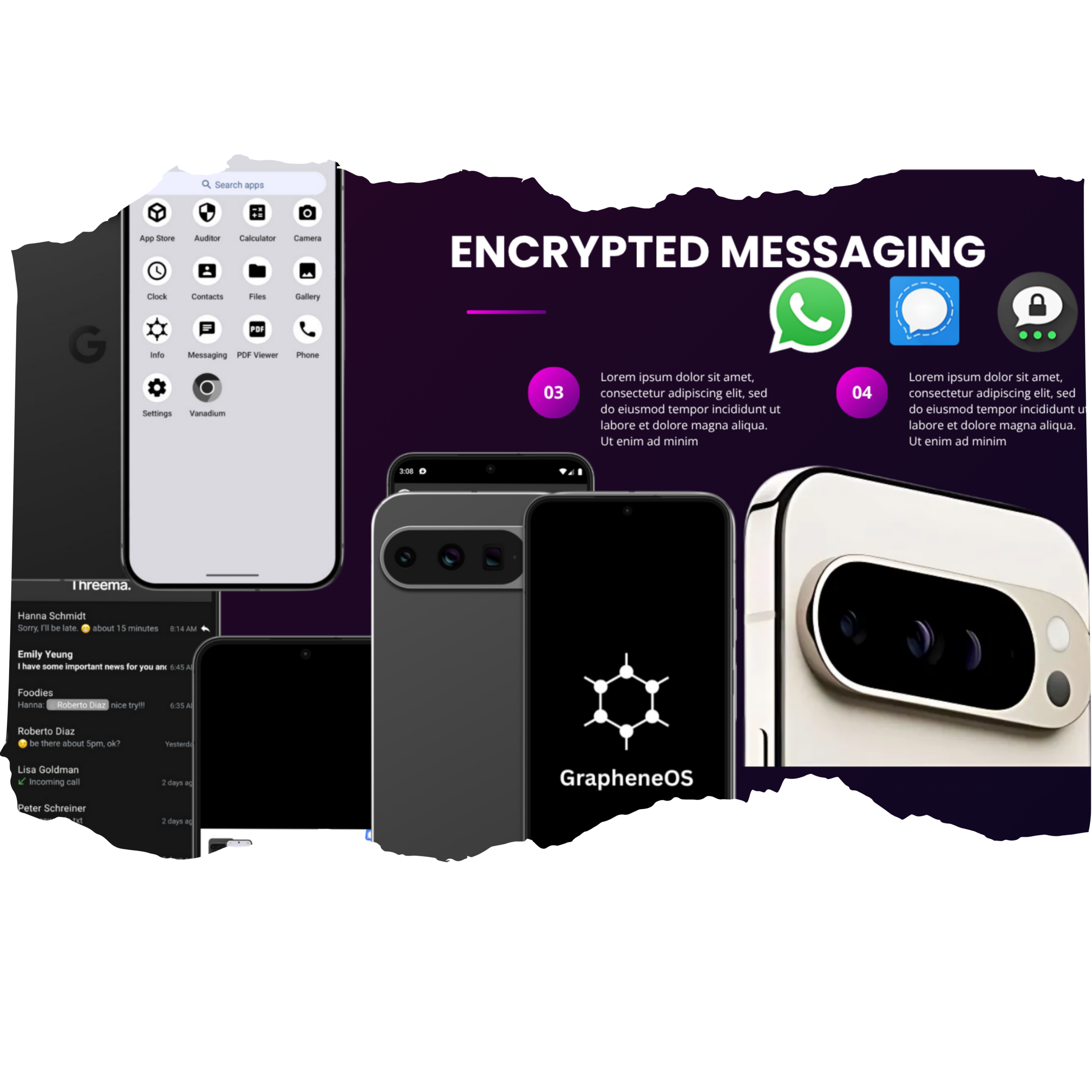
Standard smartphones fail privacy-critical users due to biometric coercion, cloud risks, and metadata leaks. Using GrapheneOS, long passphrases, duress PINs, metadata minimisation, VPNs, and physical security enhances data protection.
Encryption protects content but leaks metadata revealing contacts, timing, and location, risking privacy. Metadata minimisation, secure devices, and tailored strategies are essential for true digital security.
This guide details practical metadata minimisation and hardened mobile systems like AOSP Hardened and GrapheneOS to protect digital footprints, emphasizing privacy apps, compartmentalisation, and duress controls for real-world security.
This guide details fail-safe mobile security measures—duress PINs, panic actions, metadata minimisation, compartmentalised profiles, USB restrictions, Mullvad VPN, encryption, fake profiles, and Faraday bags—to protect data from loss, seizure,...
Duress PIN solutions provide executives and investigators with covert device access control, panic actions, decoy profiles, metadata minimisation, and role-based presets to protect data and ensure post-event integrity.
Practical tactics to minimize mobile metadata include using GrapheneOS, VPNs, firewalls, secure messaging, and Privacy Devices' hardened phones with duress PINs, ensuring privacy under seizure and coercion.
Duress PINs enable emergency actions like silent locks or data wipes to protect sensitive data under coercion. Combined with hardened OS, encryption, and threat modeling, they secure devices in...
Metadata reveals smartphone users' habits, locations, and contacts, exposing them to risks. Hardened mobile systems and strategies like encrypted communication, VPNs, and duress PINs effectively minimize this threat.
Privacy Devices builds fail-safe smartphones with duress PINs, panic actions, metadata minimization, hardware attestation, and compartmentalization to protect data under coercion, seizure, or border searches.